
You've spent months searching. Weekends touring properties, evenings comparing EMIs, family dinners discussing school zones and society amenities. You've finally signed the agreement. The keys are in your hand. Your new home is yours.
And now — before you even step inside as an owner — you're staring at a ceremony that generations of Indian families have insisted on: Griha Pravesh.
Maybe your parents are already asking about the muhurat. Maybe the priest has been contacted. Maybe your mother-in-law has already started making a list of things you must buy. Maybe you're quietly wondering: is this really necessary? Isn't it just a puja?
Here's the truth that surprises modern Indian homeowners: Griha Pravesh isn't just a religious ceremony. It's the single most important Vastu act you'll ever perform in that home.
Think of it this way — everything else in Vastu (kitchen placement, bedroom direction, main door orientation) is about how your home works on an ongoing basis. Griha Pravesh is about how your home begins. It sets the energetic foundation for every year you and your family will live there. Skip it or do it carelessly, and you're moving into a house with an incomplete foundation. Do it thoughtfully, and you're consecrating your home into becoming a genuine ghar — not just walls and rooms, but a living space that welcomes your family, protects them, and grows with them.
This guide walks you through everything you need to know — from what Griha Pravesh actually means, to how to choose the right muhurat, to the full checklist of what to do before, during, and after the ceremony. Whether you're moving into your first flat or your fifth, this will make sure you do it right.
What Griha Pravesh Actually Is (And Why It Matters)
The word Griha Pravesh literally means "entering the home" — but the ceremony itself is far more sophisticated than just walking through the door for the first time.
In Vastu Shastra tradition, a newly constructed or newly purchased home is considered energetically "raw." The walls, the floors, the ceilings — everything is neutral. It hasn't yet been infused with the intention, blessing, and energy of the family who will call it home. Until that happens, the space is neither welcoming nor protective. It's just a shell.
Griha Pravesh transforms that shell into a home. Through specific rituals, prayers, and the participation of the family, the ceremony:
- Invites divine energies to reside in and protect the home
- Purifies any residual negative energy left from construction, previous occupants, or the natural environment
- Consecrates each room for its intended purpose (cooking, sleeping, worship, etc.)
- Aligns the home with the family's intentions and future
- Establishes the household's sacred fire through the first cooking
There are actually three types of Griha Pravesh in traditional practice:
1. Apoorva Griha Pravesh — for entering a brand new home for the very first time. The most elaborate ceremony.
2. Sapoorva Griha Pravesh — for returning to your own home after a long absence (like traveling abroad for years).
3. Dwandwah Griha Pravesh — for entering a home you've renovated, or after a period of unusual events (a family death, natural calamity, etc.).
Most families reading this will be doing an Apoorva Griha Pravesh — which is what this guide focuses on.
Timing: The Muhurat Matters More Than You Think 📅
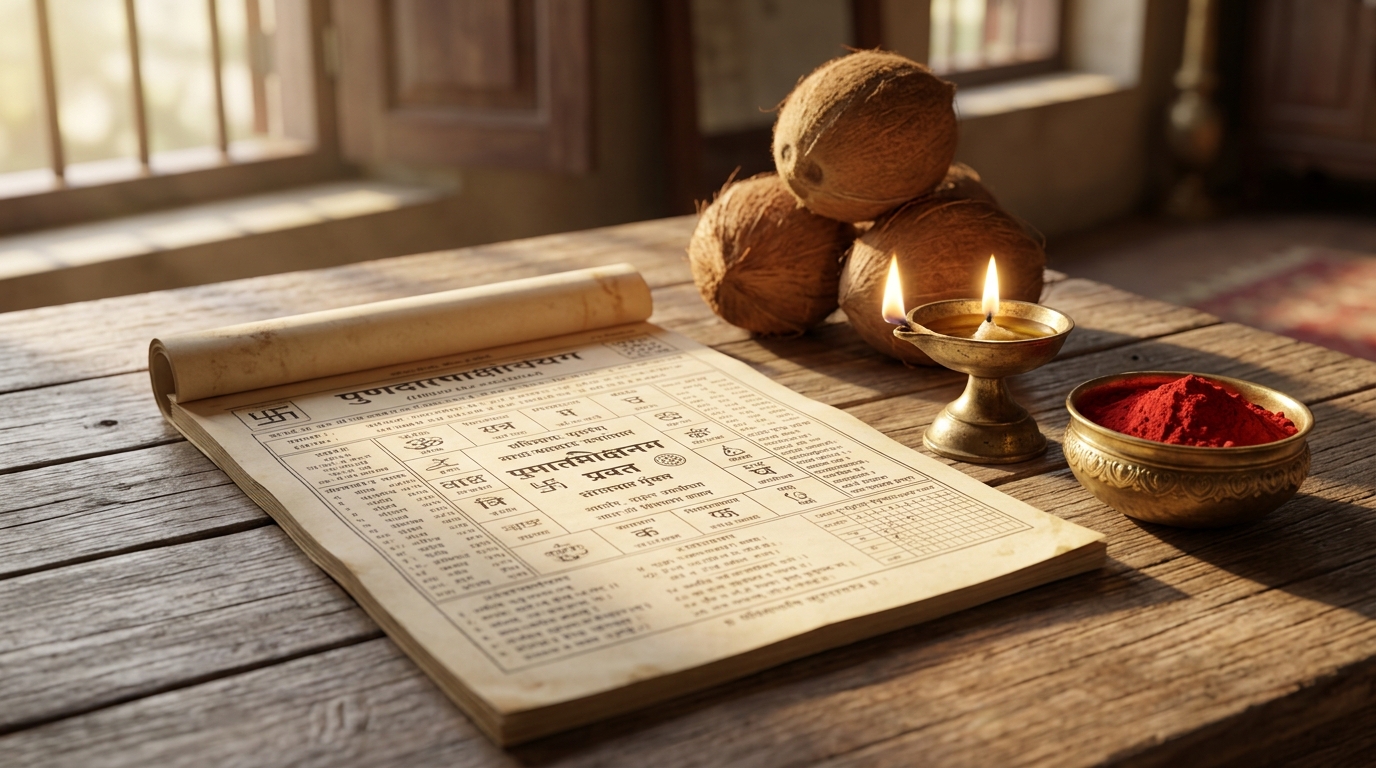
If you take one thing seriously from this article, take this one seriously: the timing of your Griha Pravesh matters. Choose it thoughtfully.
Why Muhurat Matters
In Vastu, cosmic energy — the alignment of planets, the position of the moon, the day's overall energetic signature — genuinely affects the strength of any ceremony performed. Doing your Griha Pravesh at an inauspicious muhurat is like planting a seed on the wrong day and in the wrong soil. It may still grow, but the whole start is compromised.
Best Months for Griha Pravesh
The traditionally most favorable months (according to the Hindu calendar):
- ✅ Magha (January-February)
- ✅ Phalguna (February-March)
- ✅ Vaishakha (April-May)
- ✅ Jyeshtha (May-June) — one of the strongest
- ✅ Margashirsha (November-December)
Months to Avoid
- ❌ Ashadha (June-July) — considered strongly inauspicious
- ❌ Bhadrapada (August-September)
- ❌ Ashwin (September-October)
- ❌ Paush (December-January) — associated with poor timing energy
Best Days of the Week
- ✅ Monday — associated with Chandra (Moon), gentle and welcoming
- ✅ Wednesday — Mercury; communication, growth
- ✅ Thursday — Guru (Jupiter); wisdom, expansion, prosperity
- ✅ Friday — Shukra (Venus); beauty, comfort, wealth
Days to avoid: Saturday (Shani) and Tuesday (Mangal) are generally not preferred for Griha Pravesh.
Consult a Priest or Vastu Expert
For the actual muhurat time (the specific hours on the specific day), please consult a qualified priest or Vastu expert who can check your family's birth details (janma nakshatra), the day's tithi, the position of key planets, and other factors. Getting this right is worth the small consultation fee.
Before the Ceremony: The Preparation Checklist ✅
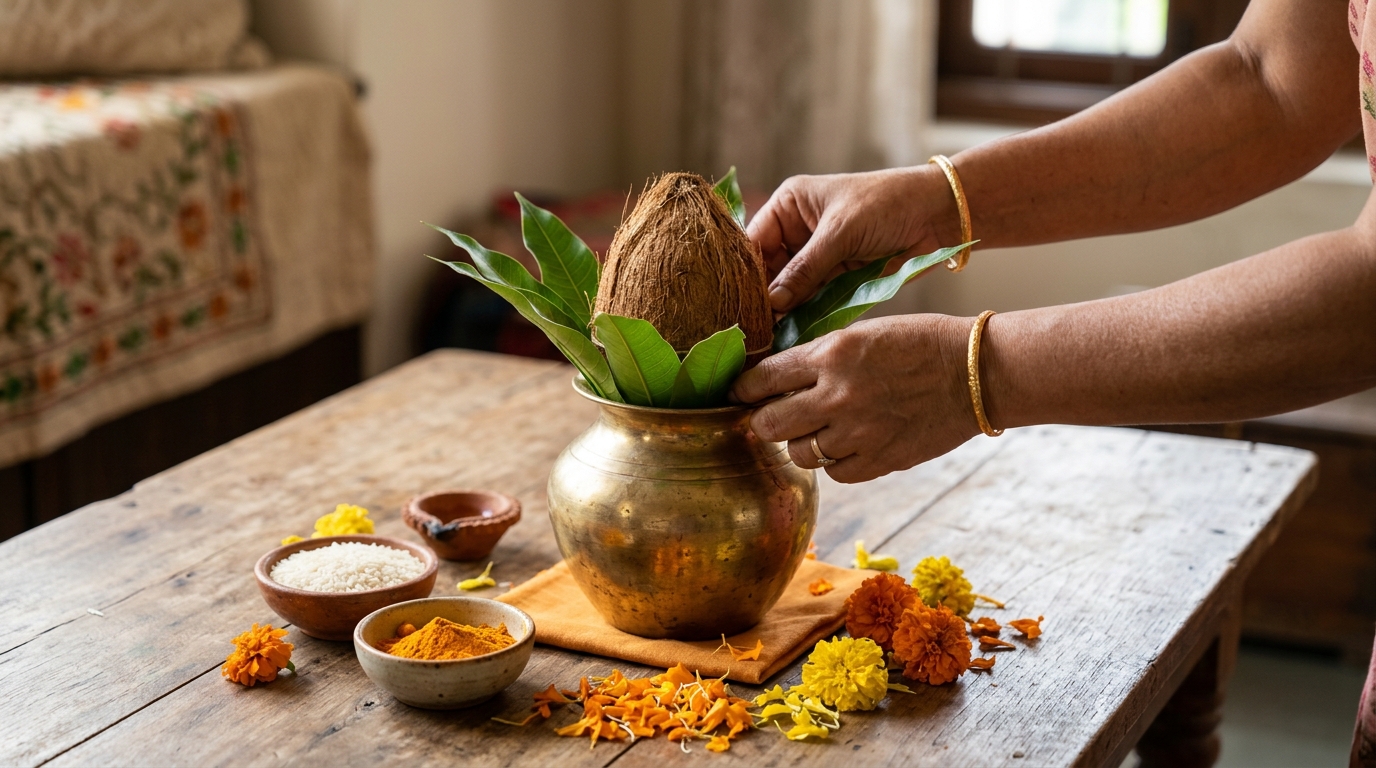
Griha Pravesh isn't a "show up and do the puja" ceremony. What you do in the days leading up to it matters just as much. Here's the full checklist:
7-10 Days Before
Clean the home thoroughly.
- Every room, every corner, every window
- Pay special attention to the corners of rooms — these accumulate the most stagnant energy
- If the home was previously occupied, this cleaning is even more important
- Consider having the walls freshly painted if budget allows (or at least the main door frame)
Check the main door.
- Ensure it opens and closes smoothly, doesn't squeak, and the handle works perfectly
- We covered this in depth in our main door importance article — the main door is the mouth of your home, and it should be in perfect condition before Griha Pravesh
Ensure all Vastu-critical items work.
- Water supply flowing
- Electricity fully functional in every room
- No leaks, no plumbing issues
- Fresh, unbroken windows and doors
Check the pooja room area.
- Whether you have a dedicated pooja room or a corner, ensure it's clean and empty, ready to receive the sacred items on the day
- See our pooja room article for placement guidance
3-4 Days Before
Do not sleep or cook in the new home yet. Traditional practice — the home should be "empty" of daily activity until the ceremony consecrates it.
Purchase all Griha Pravesh essentials:
- A brass or copper kalash (water pot)
- Coconut, mango leaves, betel nuts
- Turmeric, kumkum, rice, flowers
- Diyas, ghee, cotton wicks
- Rock salt (for purification — we covered this in our negative energy article)
- Fresh milk (for the boiling ritual)
- Any specific items your priest requests
- A small idol or image of Ganesh (obstacle remover), Lakshmi (prosperity), and your family's ishtadev
Arrange for the priest to arrive early on the day of the ceremony.
Invite family and close friends — but keep the gathering thoughtful and manageable, not overwhelming.
The Day Before
Fast lightly if your family tradition includes it. Most Griha Pravesh ceremonies are done in a state of purity.
Prepare the food that will be cooked during the ceremony (many families cook a small quantity of rice with jaggery — "gudanna" — as the first symbolic meal).
Take a spiritual shower — a proper bath, preferably with a few tulsi leaves in the water.
The Day of Griha Pravesh: What Actually Happens 🪔
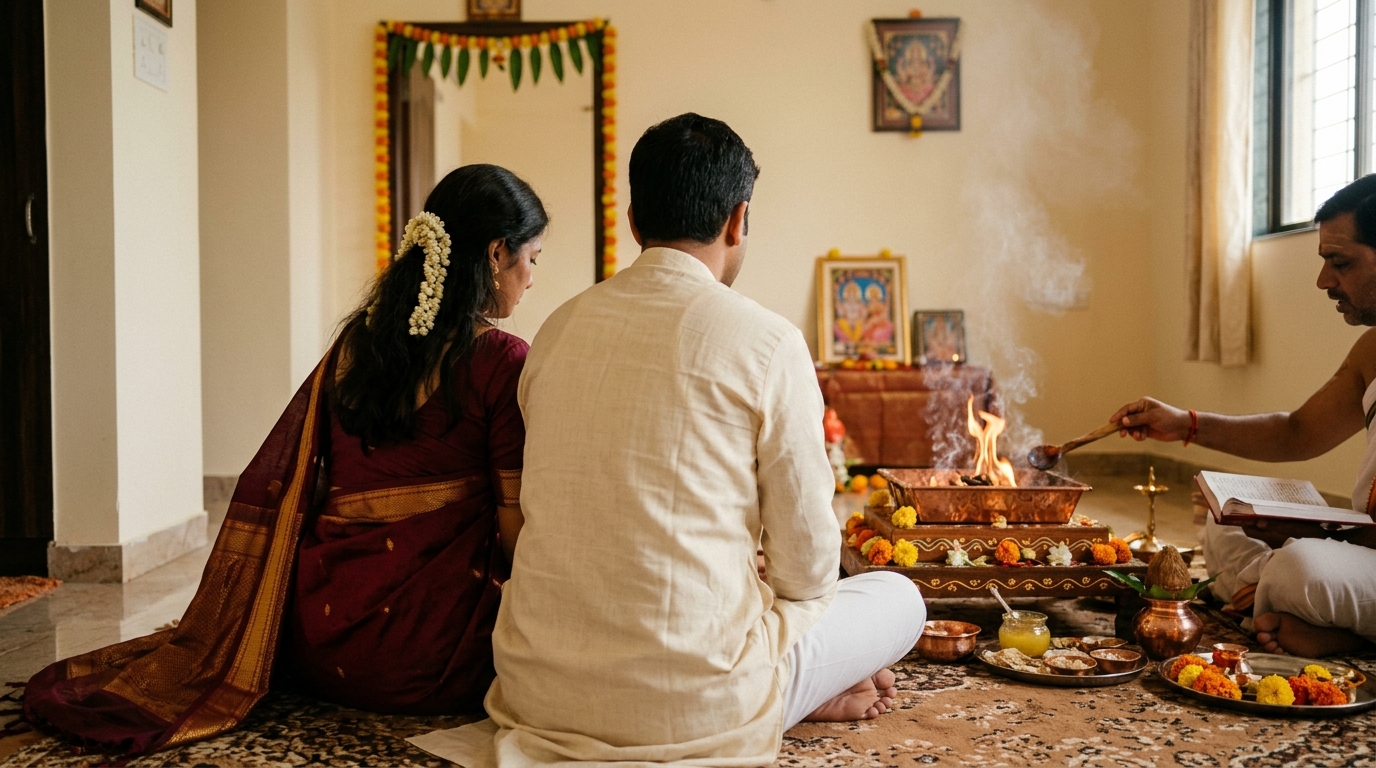
Every family and priest has their own tradition, but here's the general flow of an authentic Griha Pravesh ceremony:
Step 1: Arrival at the Threshold
The family arrives at the main door together. Do not enter yet. This is a sacred moment — you're standing at the threshold of a new life chapter.
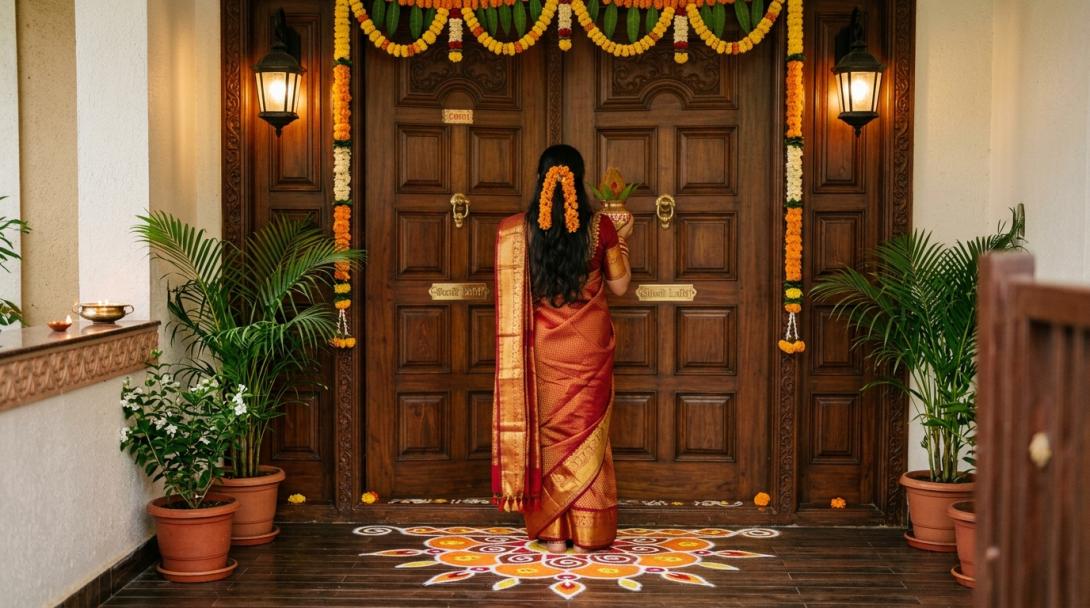
Traditionally, the woman of the house (usually the wife or mother of the household) holds a kalash filled with water — decorated with mango leaves, a coconut on top, and marked with turmeric and kumkum. This represents fullness, abundance, and blessed water.
Step 2: Breaking the Coconut (Some Traditions)
In many South Indian and some North Indian traditions, a coconut is broken at the threshold — offering the first fruit to the home. The coconut represents ego, and breaking it symbolizes surrendering to enter the new phase.
Step 3: The Family Enters Right Foot First
This is a beautiful detail: step over the threshold with your right foot first. The right foot in Indian tradition represents auspiciousness. The wife or lady of the house often leads this entry, followed by the husband, then the children, then other family members.
Step 4: The Kalash Is Placed in the Pooja Space
The blessed kalash is carried through the home and placed at the intended pooja spot. This symbolically brings the sacred water into every part of the home.
Step 5: The Ganesh Puja
The ceremony formally begins with Ganesh Puja — invoking the remover of obstacles. This is considered essential to any auspicious beginning in Hindu tradition.
Step 6: The Havan / Homa
A small sacred fire (havan) is lit — traditionally with samagri (sacred herbs), ghee, and specific mantras. The havan purifies the entire home. Family members offer ahutis (small offerings) into the fire while the priest chants mantras.
This step is one of the most powerful energetically. The rising smoke reaches every corner of the home, cleansing and consecrating it.
Step 7: Boiling of Milk
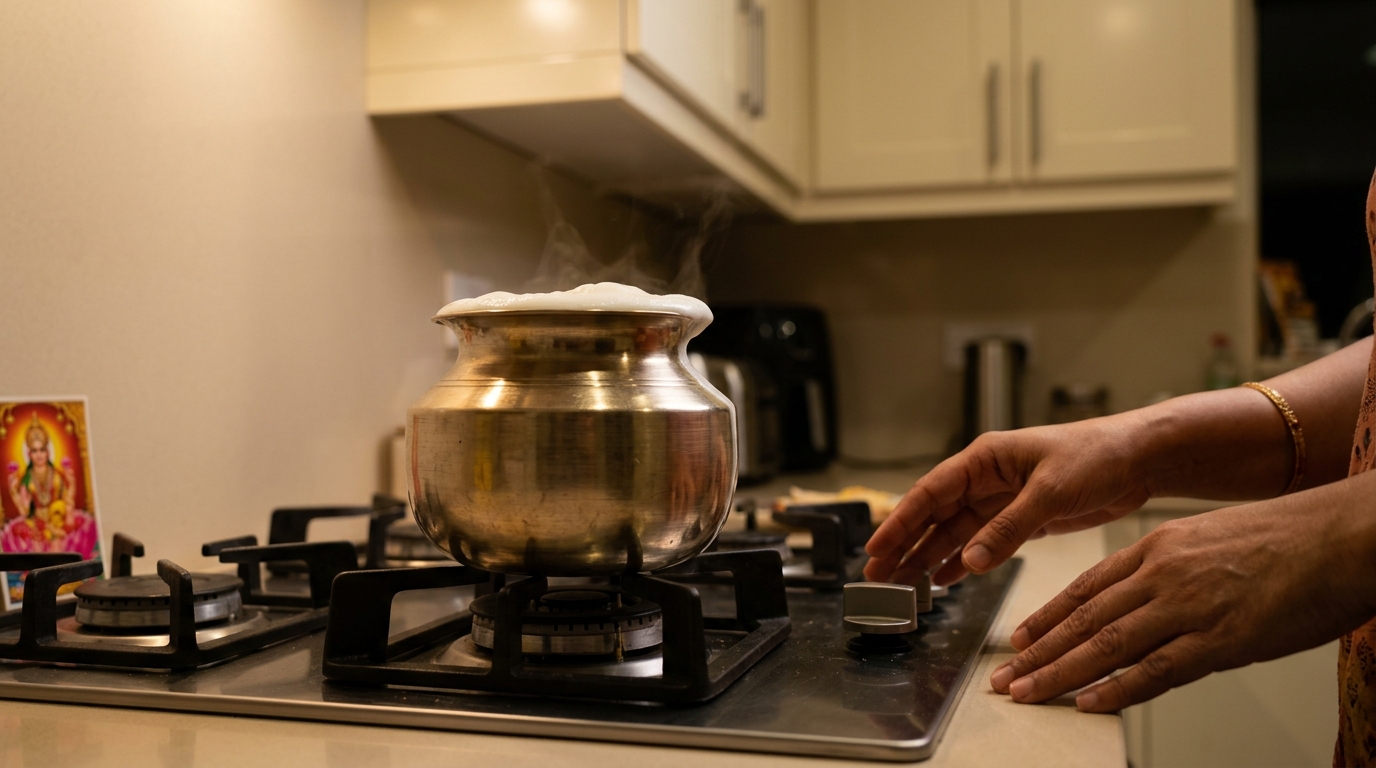
One of the most iconic Griha Pravesh moments: milk is boiled in the kitchen — usually the first thing cooked in the new home. When the milk boils over and spills gently, it symbolizes abundance overflowing in the new home.
Some families add rice to the milk to make kheer / payasam — the first meal.
Step 8: The First Meal
The family shares the first meal together in the new home — traditionally the gudanna (rice with jaggery) or kheer that was prepared. This is a beautiful, quiet moment. Share it with the extended family and priest.
Step 9: Beginning the Household Fire
Traditionally, the fire lit during Griha Pravesh is kept alive (or symbolically continued) through the household's daily cooking. The kitchen — as we discussed in our kitchen Vastu article — becomes the seat of Agni, the sacred fire that nourishes the family.
What to Bring INTO the Home First (Order Matters) 📿
Here's a small but powerful Vastu detail most families overlook: the order in which items enter your new home matters.
First items to bring in (in this order):
- The kalash with sacred water — as we described above
- The idols/images of deities — establishing the divine presence
- A small quantity of rice, wheat, or grains — symbolizing food security
- Milk and ghee — symbolizing prosperity
- Salt and jaggery — symbolizing balance and sweetness
- A small silver or gold coin — symbolizing wealth
- A pot of soil from a fertile place (if traditional) — symbolizing groundedness
Then the family enters, along with the priest.
What NOT to bring in first:
- ❌ Suitcases and boxes of daily belongings (these come after the ceremony)
- ❌ Broken items or things you've been meaning to throw away
- ❌ Old dustbins or cleaning items
- ❌ Anything from the previous home that feels "heavy" or associated with difficult memories
Give the home a sacred beginning. Everything else — the mattresses, the almirah, the TV — can wait for the next day.
Special Vastu Blessings for Specific Rooms 🕉️
During or right after the ceremony, many families do small consecration acts in individual rooms:
Kitchen:
- Light the first cooking fire
- Place a small Lakshmi image or coin near the stove
- Sprinkle a few grains of rice and turmeric in the corners
Pooja Room:
- Establish the deities in their permanent positions
- Light the first diya and let it burn until it naturally extinguishes
- Refer to our pooja room article for placement guidance
Master Bedroom:
- Sprinkle a few grains of rice and rose petals
- Bring a small tulsi or fresh flowers into the room
- Place a small Ganesh or family deity image
Living Room:
- Light a diya
- Place fresh flowers
- Ensure the seating area is welcoming and clean
Entrance:
- Create a fresh rangoli or floor design
- Hang a green marigold toran above the main door
- Place a Ganesh image on the door frame
After Griha Pravesh: The Next 40 Days 🌸
Traditional Vastu wisdom holds that the first 40 days after Griha Pravesh are particularly important — the home is "settling in" to its consecrated state.
During these 40 days:
- Light a diya every morning and evening in the pooja space
- Cook fresh food daily — especially in the first week
- Do not leave the home vacant for more than 2-3 days at a stretch
- Avoid major arguments or emotional outbursts — the walls are still absorbing the household's energy patterns
- Invite happy, positive people — hosting friends and family adds their good energy to the space
- Continue small daily rituals — sweeping the threshold, wiping surfaces, offering agarbatti
Think of these 40 days as a home's "childhood." What it experiences here shapes its character for years to come.
Modern Realities: What If I Can't Do a Traditional Ceremony? 🤔
I want to be honest and gentle about this: not every family in modern India can do a full traditional Griha Pravesh. Some reasons:
- You're moving into a rental (not owned)
- Financial constraints
- Distance from family / no priest available
- Interfaith family
- Personal beliefs that don't align with traditional puja
Here's the good news: even a simplified ceremony done with sincere intention is meaningful. Vastu is generous. It responds more to genuine care than to elaborate ritual.
Simplified Griha Pravesh (5 minutes):
- Enter the home together as a family, right foot first
- Light a small diya at the entrance
- Carry a small brass bowl of water with a few tulsi leaves through every room
- Boil milk in the kitchen — let it overflow briefly
- Sit together and share a simple sweet dish
- Light incense in the pooja corner (even if it's just a shelf)
- Say a family prayer, thanks, or intention — in whatever tradition or language feels right
This costs almost nothing. Takes 30 minutes total. And it genuinely consecrates the space.
We covered similar practical Vastu approaches in our renters' Vastu article — the principles apply beautifully here too.
Common Griha Pravesh Mistakes to Avoid ❌
A quick list of things people commonly get wrong:
- ❌ Doing it in a hurry because "the movers are coming tomorrow" — reschedule the movers if needed
- ❌ Skipping the muhurat check — inauspicious timing weakens the whole ceremony
- ❌ Bringing furniture and boxes in first, then doing the puja — the ceremony should ideally be the first event in the home
- ❌ Fighting or arguing on the day — the energy of the day sets the tone
- ❌ Cutting the priest's mantras short for time — let the ceremony breathe
- ❌ Neglecting the boiling of milk — this small ritual carries huge symbolic weight
- ❌ Not lighting a diya for 40 days after — the home's foundation is still being set
- ❌ Moving into a home with major unresolved Vastu defects without addressing them first
That last one is important. If your new home has serious Vastu issues (see our buying a flat article), the Griha Pravesh helps but doesn't fully compensate. Address structural defects with expert consultation.
🗺️ Set Up Your New Home Right — From Day One
Griha Pravesh is the beginning. But the real Vastu work is knowing where every room, corner, and piece of furniture should go — before you unpack. Getting the setup right from Day 1 is far easier than rearranging months later.
We built a free tool where you can upload your new home's floor plan and instantly see it mapped according to proper Vastu directions — including the best spots for your master bedroom, kitchen, pooja room, and every other important area. Perfect for the days right after Griha Pravesh when you're deciding where the bed goes, where to place the fridge, where the study desk should sit.
👉 Upload your new home's floor plan and plan your setup in 30 seconds
Just a photo or scan (PNG, JPG, JPEG). Set up your consecrated home the way it was meant to be set up — right from the start.
Final Thoughts: Begin Your New Home the Way It Deserves 💫
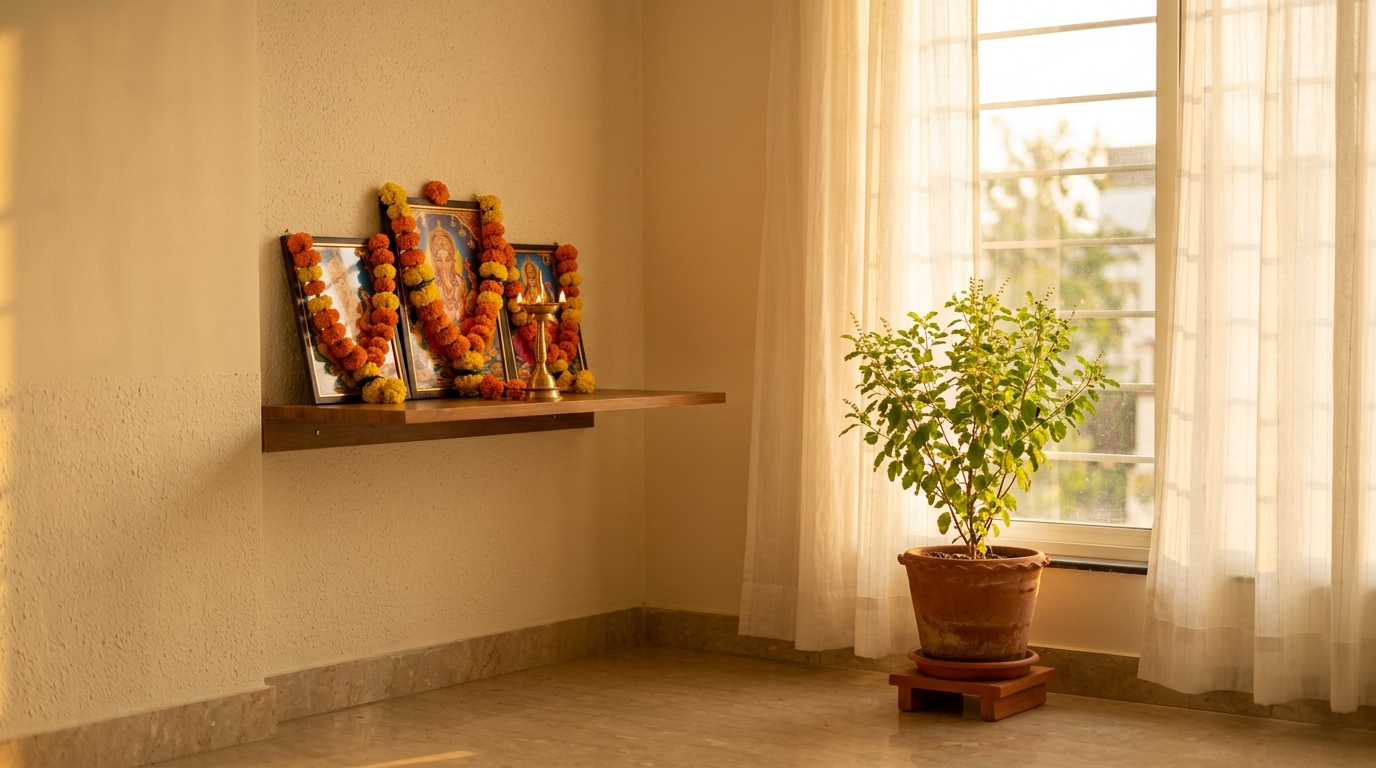
Here's the truth about a home: it will hold thousands of your family's moments over the years. Countless dinners. Difficult mornings. Beautiful anniversaries. Long conversations. Quiet Sunday afternoons. First steps of children. Last visits of aging parents. Weddings. Losses. Celebrations. Recoveries.
That's a lot for four walls to hold.
Griha Pravesh isn't just a ritual — it's the way our ancestors chose to ask the home to receive all of this with grace. To bless it before asking it to bless the family. To consecrate it into something more than just structure.
Whether you do a full traditional ceremony with a priest, or a beautiful simplified version with just your family — the spirit is the same. You're saying to the home: we honor you. We're beginning with you. Please receive us well.
Homes respond to that. Not immediately, not dramatically, but over years — in the way they hold your family. In the way they feel to return to. In the way they welcome guests. In the way they carry your family's story.
Begin your new home right. Set the foundation with love and intention. Everything else in your Vastu journey builds from here. 🪔🌸
Are you planning your Griha Pravesh soon, or moving into a new home this year? Save this guide, share it with your family and priest, and forward it to anyone in your life about to make this beautiful transition. Sometimes the best housewarming gift is knowing how to warm the house properly. 🙏