
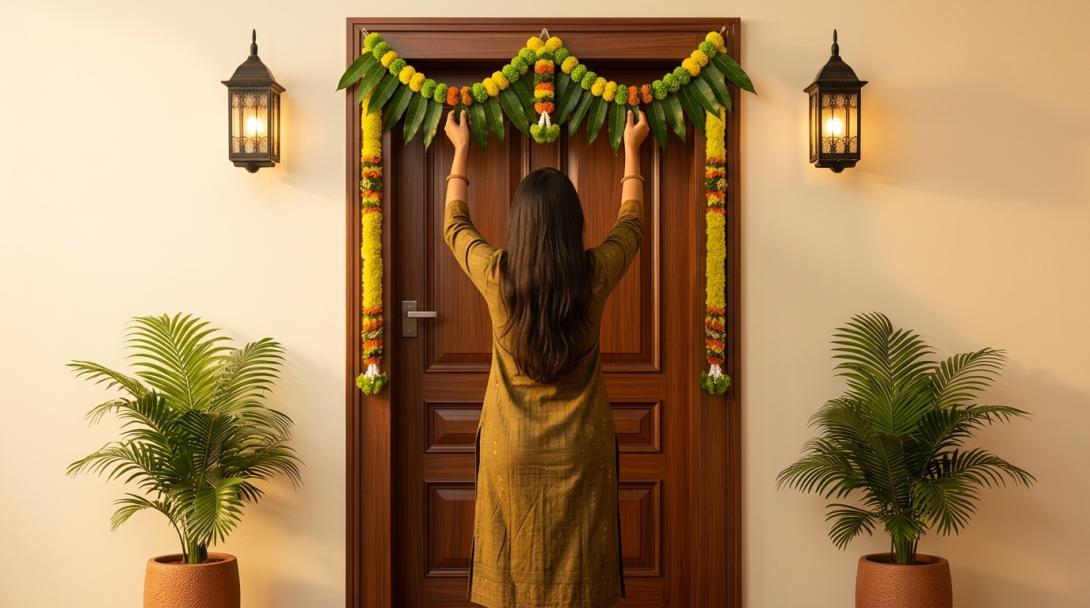
You probably walk through it eight, ten, fifteen times a day.
Every morning as you leave for work. Every evening as you come home. Every time the delivery bell rings. Every time the maid arrives. Every time your child comes back from school, your spouse from a long day, your parents from an evening walk.
The main door of your home is quietly the busiest, most-used object in your entire life.
And yet — for most of us — it's an afterthought. We choose it based on what the builder installed, what fits the frame, what looks decent. We don't oil the hinges when they start squeaking. We don't fix the peephole when it stops working. We stack shoes right next to it. We hang a "welcome" sign we bought years ago and haven't touched since.
Here's what Vastu Shastra has known for thousands of years — and what most modern homeowners never think about:
Your main door is not just a door. It is the mouth of your home.
Every kind of energy that ever enters your house — good, bad, prosperity, health, opportunity, disturbance — enters through that one spot. The direction it faces, the condition it's in, what stands directly in front of it, what you keep near it, how you treat it — all of this shapes the invisible atmosphere of every other room inside.
If the Vastu principles in every other article on this blog are the rooms of the house, the main door is the foundation. Get it right, and everything else works better. Get it wrong, and even perfectly-arranged rooms inside can't quite compensate.
Let me walk you through why the main door matters so much — and everything you can do to make yours a genuine welcome mat for prosperity, peace, and blessings.
Why the Main Door Is the Most Important Spot in Your Home
Think of your home as a living body.
The main door is the mouth. It's where the outside world meets the inside world. It's where energy — like breath — enters and exits, all day, every day. The health of that "mouth" determines the health of everything inside.
In Vastu Shastra, this isn't a metaphor. It's a practical, structural principle. The main door is understood as an active energy portal — one of the very few points in a home where the outside cosmic energies actually cross the threshold and become part of the household's atmosphere.
Everything else in Vastu — where the kitchen goes, where the bed points, where the pooja room sits — is about how energy circulates inside the home.
The main door is about what kind of energy gets to come inside in the first place.
This is why, in every good Vastu consultation, the main door is the first thing checked. Not the biggest room. Not the most expensive corner. The door.
Now let's talk about what makes a main door work in your favor.
The Direction of Your Main Door — The Foundation of Everything 🧭
This is the single most important Vastu factor of your entire home. We covered it in our Vastu checklist for buying a flat, but here's the deeper reasoning most articles skip.
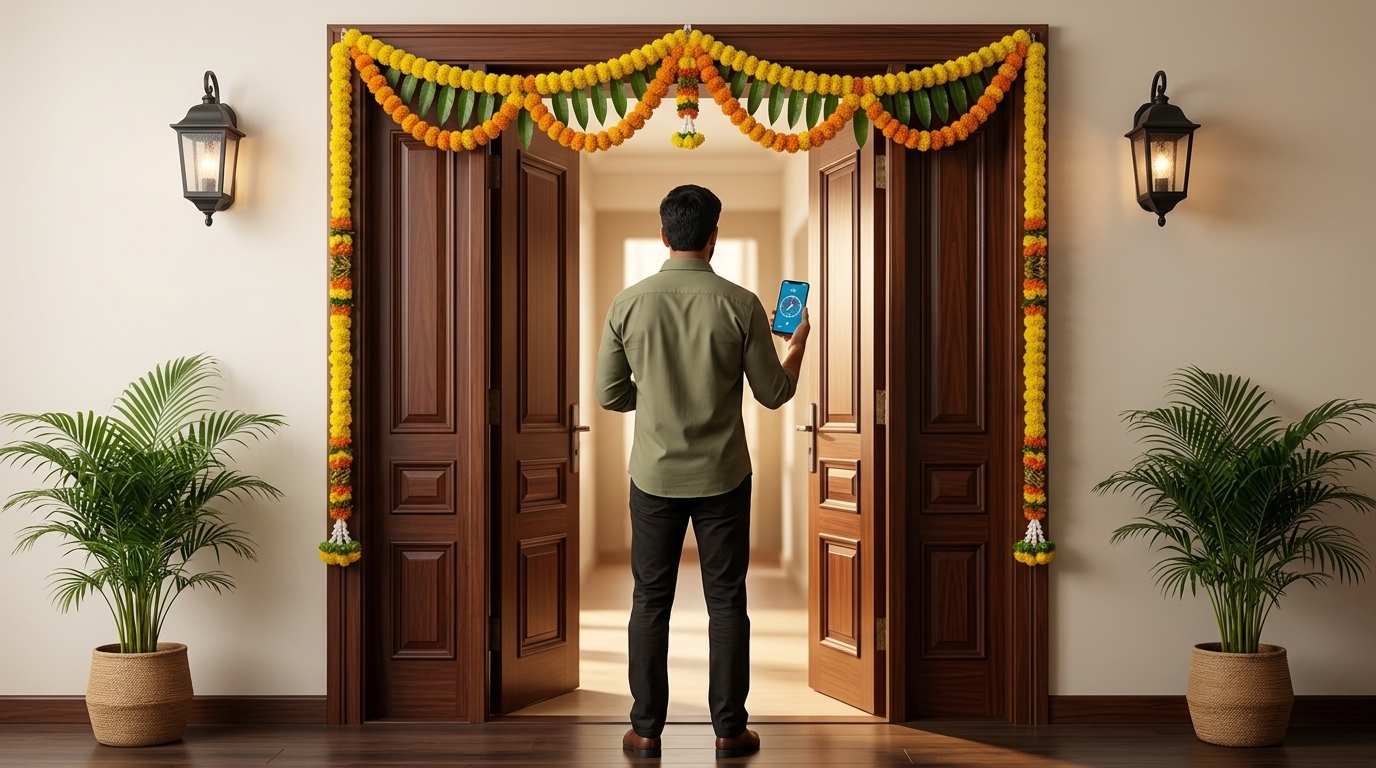
How to check your main door's direction:
Stand inside your home, just at the threshold of your main door, facing outward (the direction you'd walk to leave). Open your phone's compass app. Whatever direction your face points — that's the direction your main door faces.
The best directions for a main door:
✅ North — The Direction of Wealth
Ruled by Kubera, the god of wealth. A North-facing main door is believed to invite steady financial prosperity, opportunity, and abundance into the home. Especially favorable for business owners, entrepreneurs, and families building wealth.
✅ East — The Direction of Vitality and Growth
Ruled by the rising sun. An East-facing door welcomes fresh, energetic morning light and is associated with health, growth, career progression, and family well-being. Ideal for growing families and young households.
✅ North-East — The Most Sacred Direction
The Ishan Kona — the sacred corner. A main door facing North-East is considered highly auspicious, blending divine grace with material prosperity. Excellent for families with strong spiritual practice.
Acceptable direction:
🟡 West — Neutral
A West-facing door isn't ideal but isn't harmful either. It's workable — most other Vastu factors can compensate.
Directions to be cautious about:
❌ South
Traditionally the direction of restraint and endings. Historically associated with struggle and obstacles. Not ideal for main doors — though remedies exist.
❌ South-West
Heavy earth energy — good for grounding and stability inside the home, but not welcoming for energy trying to enter. Often associated with slow business, delayed opportunities.
❌ South-East
The fire zone. A main door here tends to invite restless, argumentative energy. Often linked to household tension.
If your main door faces one of these three "difficult" directions, don't panic — most of the article ahead is about how to strengthen your entrance regardless of direction. Direction is important, but far from the only factor.
What Stands Directly in Front of Your Main Door 👀
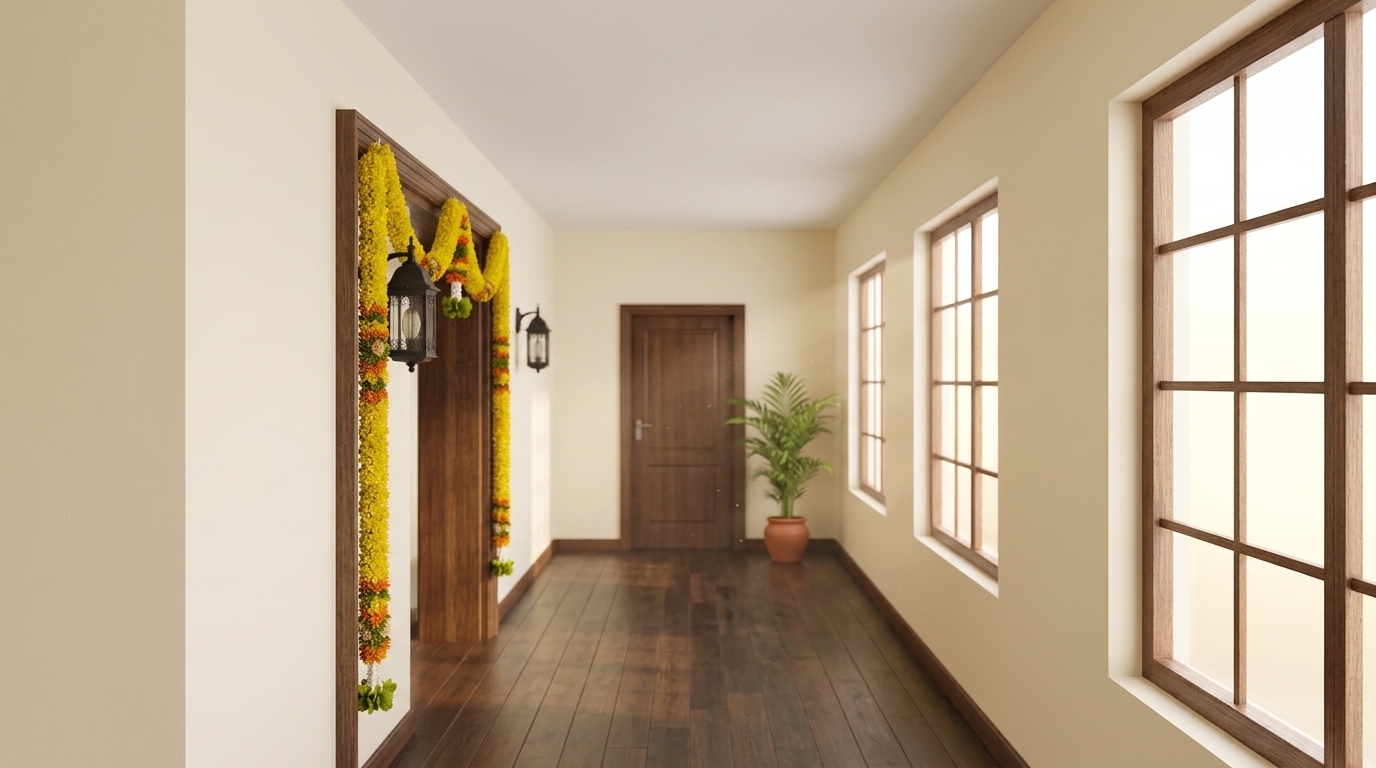
If you open your main door and step outside, what do you see?
This first sight — the very first energy that meets your door every morning — matters more than most people realize. The energy of what's directly opposite your entrance flows into your home continuously.
Positive views from the main door:
- ✅ Open corridor or hallway
- ✅ Natural greenery, garden, or open sky
- ✅ Another closed door or plain wall
- ✅ Clean, well-lit lobby area
Warning signs — "poison arrows":
- ⚠️ A staircase going down directly facing the door — the energy of your home literally "flows down" the stairs
- ⚠️ A lift or elevator directly opposite — restless, mechanical energy entering
- ⚠️ A toilet door directly facing your entrance — negative energy right at the threshold
- ⚠️ A sharp corner of another building pointed at your door — the classic "poison arrow"
- ⚠️ A T-junction road ending at your door — heavy, unsettling energy
- ⚠️ A large tree directly in front — blocks the flow of energy in
Remedies if you have a poison arrow:
- Place a small mirror or bagua on the outside of your main door (traditional Vastu/Feng Shui remedy)
- Add a healthy plant or tulsi just inside the entrance to filter incoming energy
- Hang a small wind chime or bell near the door
- Keep the entryway exceptionally bright and clean to strengthen positive energy
The Condition of the Door Itself 🚪
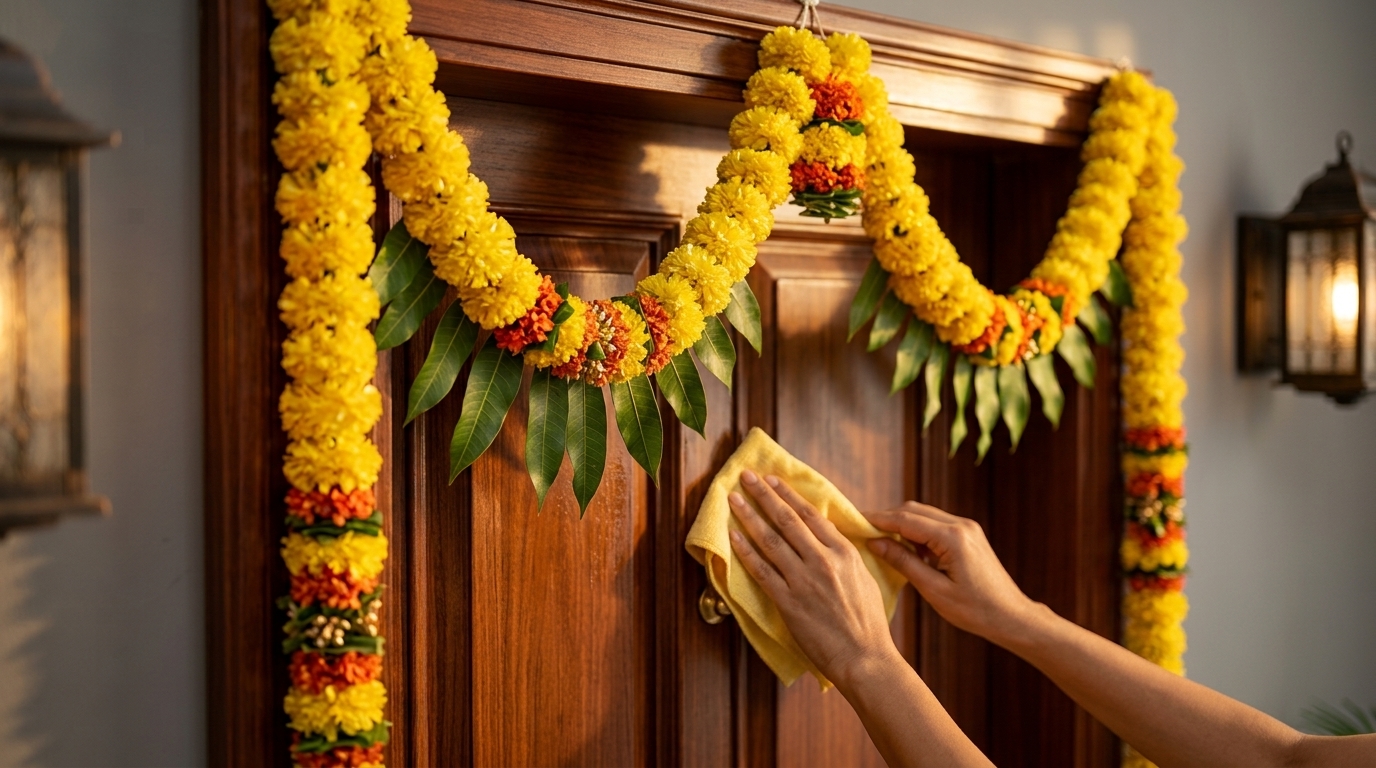
Here's something you probably haven't thought about in months, maybe years: the physical condition of your main door is itself a Vastu factor.
A door that is dignified, well-maintained, and treated with care radiates a very different energy than one that squeaks, sticks, has faded paint, or a broken handle.
A well-cared-for main door means:
- ✅ Opens and closes smoothly without any resistance
- ✅ Hinges don't squeak — oil them immediately if they do
- ✅ Doorknob or handle is solid and works perfectly
- ✅ Peephole functions properly
- ✅ Lock and latch mechanisms are all working
- ✅ Nameplate is clean, straight, and legible
- ✅ Paint or polish is fresh, not peeling
- ✅ No cracks, dents, or splits in the wood
A neglected main door means:
- ❌ Squeaks every time it opens
- ❌ Chipped, peeling paint
- ❌ Broken doorbell or peephole
- ❌ Bent nameplate
- ❌ Handle that's loose or coming apart
- ❌ Sticky lock that needs jiggling
In Vastu, a broken or neglected main door is one of the most damaging home Vastu issues — because every piece of energy trying to enter your home has to pass through that damaged threshold, day after day. It's the equivalent of trying to bring guests home through a chipped, creaky doorway. Even good energy hesitates.
The fix: Take one weekend. Oil the hinges. Tighten the handle. Fix the peephole. Polish the door. Straighten the nameplate. Replace the "welcome" mat if it's faded or torn.
This single afternoon of maintenance can shift the energy of your entire home.
The Threshold — The Sacred Line 🌸
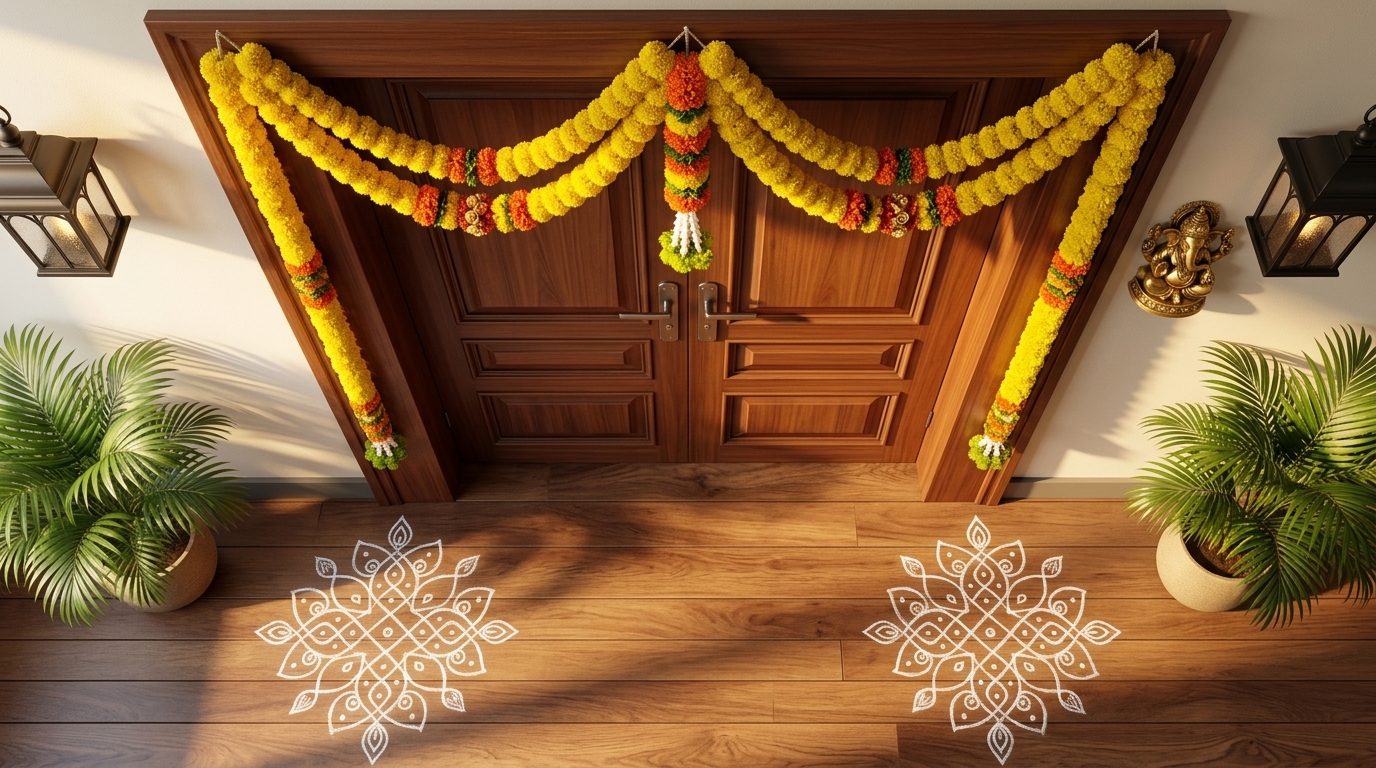
The threshold of your main door — the actual line you cross when entering — is considered sacred in Vastu.
Traditional practices that honor this threshold:
- A small rangoli or design on either side of the door
- A woven toran (garland) hung above the door frame — one of the most powerful positive-energy symbols in Indian tradition
- Two small deity images on either side of the door (Ganesh is most common — remover of obstacles)
- A daily wipe of the threshold to remove dust and stagnant energy
- A small brass bell or wind chime near the entrance
Never:
- ❌ Step on the threshold — always step over it
- ❌ Leave shoes directly on the threshold
- ❌ Keep dustbins near the threshold
- ❌ Let dust or clutter accumulate at the entry
Ancient wisdom is often ridiculed for these "small" practices — but they exist because generations of families noticed that homes with honored thresholds felt different than homes with neglected ones. That observation deserves respect.
What to Keep — and NOT Keep — Near Your Main Door 🌿
The area immediately around your main door — both inside and outside — creates a "buffer zone" of energy for your home. What you keep there matters enormously.
✅ Keep near your main door:
- A small healthy plant — Tulsi is ideal (we covered this in our plants that attract wealth article)
- Good, warm lighting — a small lamp or a well-lit bulb that's always working
- A clean, welcoming doormat — replaced when faded
- A small Ganesh image or auspicious symbol on the door frame
- Fresh flowers on festival days and special occasions
- A soft toran or fabric garland
- A small brass or copper item — considered energetically clean and positive
❌ Don't keep near your main door:
- A pile of shoes — the biggest and most common Vastu mistake. Shoes carry the energy of everywhere they've been, and piling them at the entrance means all that outside energy sits at your threshold. Store them inside a closed cabinet or shelf, ideally inside the home away from the door.
- A dustbin — literally saying "welcome to the dumping ground"
- Broken items waiting to be repaired — stuck, stagnant energy
- Cluttered mailboxes overflowing with old flyers
- Dead or dying plants — the opposite of a welcome
- Anything sharp or aggressive pointing at the door
- Umbrellas propped against the wall for weeks (wet, stagnant, unfinished)
Take a look at your entrance right now — what's living there? If you don't like the honest answer, you now know where to start.
The Light Around Your Main Door 💡
Bright, warm, welcoming light at the entrance is one of the simplest and most powerful positive Vastu factors — and one of the most neglected.
A well-lit entrance signals:
- The home is alive, cared for, and welcoming
- Positive energy is invited in
- Family members returning home feel welcomed
A dim entrance signals:
- The home is neglected, tired, unwelcoming
- Energy hesitates to enter
- Family members feel the low energy before they even open the door
The fix:
- Ensure a warm-toned bulb is always working at your entrance — replace immediately if it burns out
- Keep it on during evening hours — even when nobody's expected
- Yellow or warm white is preferable to harsh white or blue-toned LED
- If your entrance is in a common apartment corridor with poor lighting, add a small plug-in warm light just inside your door
This one habit — a warm light glowing at your entrance every evening — quietly changes the energy of your entire home.
The Sound of Your Main Door 🔔
Here's something almost no one thinks about: the sound your main door makes matters in Vastu.
- A pleasant doorbell chime — invites positive energy. Replace harsh, jarring, or buzzer-style bells with softer, warmer tones.
- A small brass bell or wind chime near the door — creates gentle sound movement, considered energetically cleansing
- Squeaky hinges — the opposite: an unpleasant sound that disturbs the space every single time the door moves. Oil them today.
Even the small sound a solid, well-fitted door makes as it closes — a satisfying "thunk" versus a rattly slam — subtly affects how the space feels.
The Main Door as a Family's Face to the World 🌍
Beyond direction, condition, and decoration, there's a subtler truth about the main door:
It is your family's face to the world.
Every visitor forms a first impression at your door. Every delivery person, every neighbor, every relative walking in for the first time — they read the door before they read anything else about your home. And you, as the household, are quietly telling the world how you value your home in how you keep this one small space.
Families who honor their entrance — clean, cared for, well-lit, decorated with a small toran or Ganesh image, always welcoming — tend to have homes where guests feel warm, family feels welcomed, and prosperity feels invited.
Families who neglect it — dim bulbs, faded paint, piled shoes, broken bells — often, over time, have homes where things feel a little chaotic, a little heavy, a little tired.
This isn't just Vastu. This is life.
A Quick Main Door Vastu Audit ✅
Take 10 minutes and check your entrance honestly:
- [ ] Does my main door face a favorable direction (North, East, or North-East)?
- [ ] Is there no "poison arrow" (staircase, lift, sharp corner, toilet) directly facing it?
- [ ] Does the door open and close smoothly without squeaking?
- [ ] Is the paint/polish fresh, without cracks, chips, or peeling?
- [ ] Is the handle solid, the peephole working, the lock smooth?
- [ ] Is the nameplate straight, clean, and legible?
- [ ] Is there a working, warm-toned light at the entrance?
- [ ] Is the doormat clean and welcoming?
- [ ] Are shoes stored inside a closed cabinet (not piled at the door)?
- [ ] Is there no dustbin or clutter near the entrance?
- [ ] Is there a small plant, Ganesh image, or toran to welcome positive energy?
- [ ] Does the threshold get wiped/cleaned regularly?
Each "yes" strengthens your home's energy foundation. Each "no" is a small opportunity waiting for a Saturday afternoon.
🗺️ Find Your Home's Exact Main Door Direction
Knowing that North, East, and North-East are the best directions is one thing. Knowing exactly which direction YOUR main door faces — and how the rest of your home's Vastu zones align with that entrance — is where this becomes actionable.
We built a free tool where you can upload your floor plan and instantly see your home mapped according to proper Vastu directions — including your main door's exact direction, the strength of each zone, and any potential Vastu defects to address.
👉 Upload your floor plan and check your main door's Vastu in 30 seconds
Just a photo or scan (PNG, JPG, JPEG). Your main door is the foundation of your home's Vastu — knowing it clearly is the first step to strengthening everything else.
Final Thoughts: Care Deeply for the Threshold 💫
Here's a thought worth sitting with:
Your home has one door that everyone entering — including you — passes through, thousands of times each year. Family. Guests. Delivery people. Neighbors. Blessings. Opportunities. Difficult days. Beautiful days.
In your busiest week, in your quietest weekend, in your happiest years and your hardest ones — that one door holds it all. It's the constant witness to your family's coming and going.
Doesn't it deserve some care?
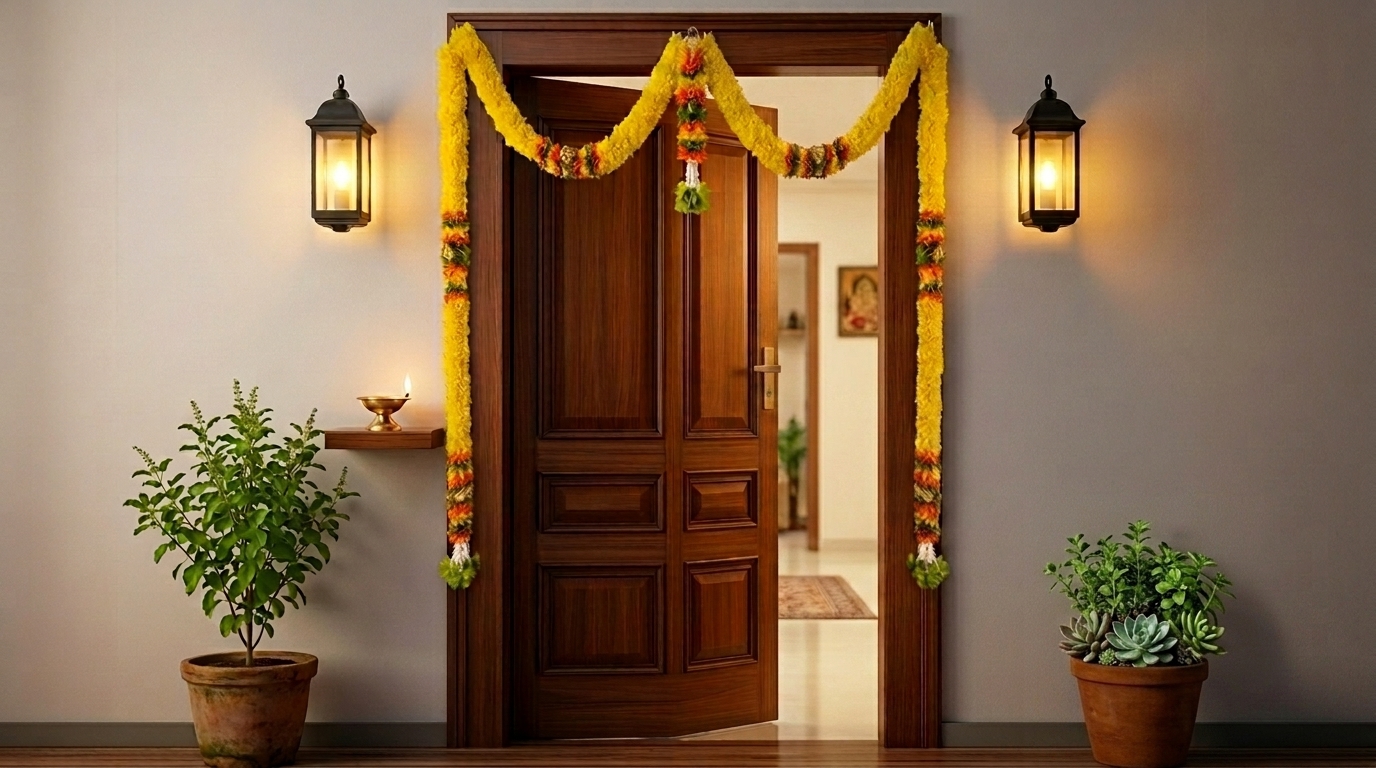
This weekend, spend an hour with it. Oil the hinges. Polish the wood. Fix the light. Replace the doormat. Hang a small toran. Place a Ganesh image on the frame. Store the shoes properly. Sweep the threshold.
You'll be amazed how the whole home feels afterward.
Because when the mouth of the house is honored, everything the house breathes gets a little sweeter. 🌸🪔
Have you honored your main door lately? Try just a few of the fixes in this article this weekend — and share this with the family member who typically maintains the home. Sometimes the smallest square meter of a home holds the largest power. 🙏